From the Author
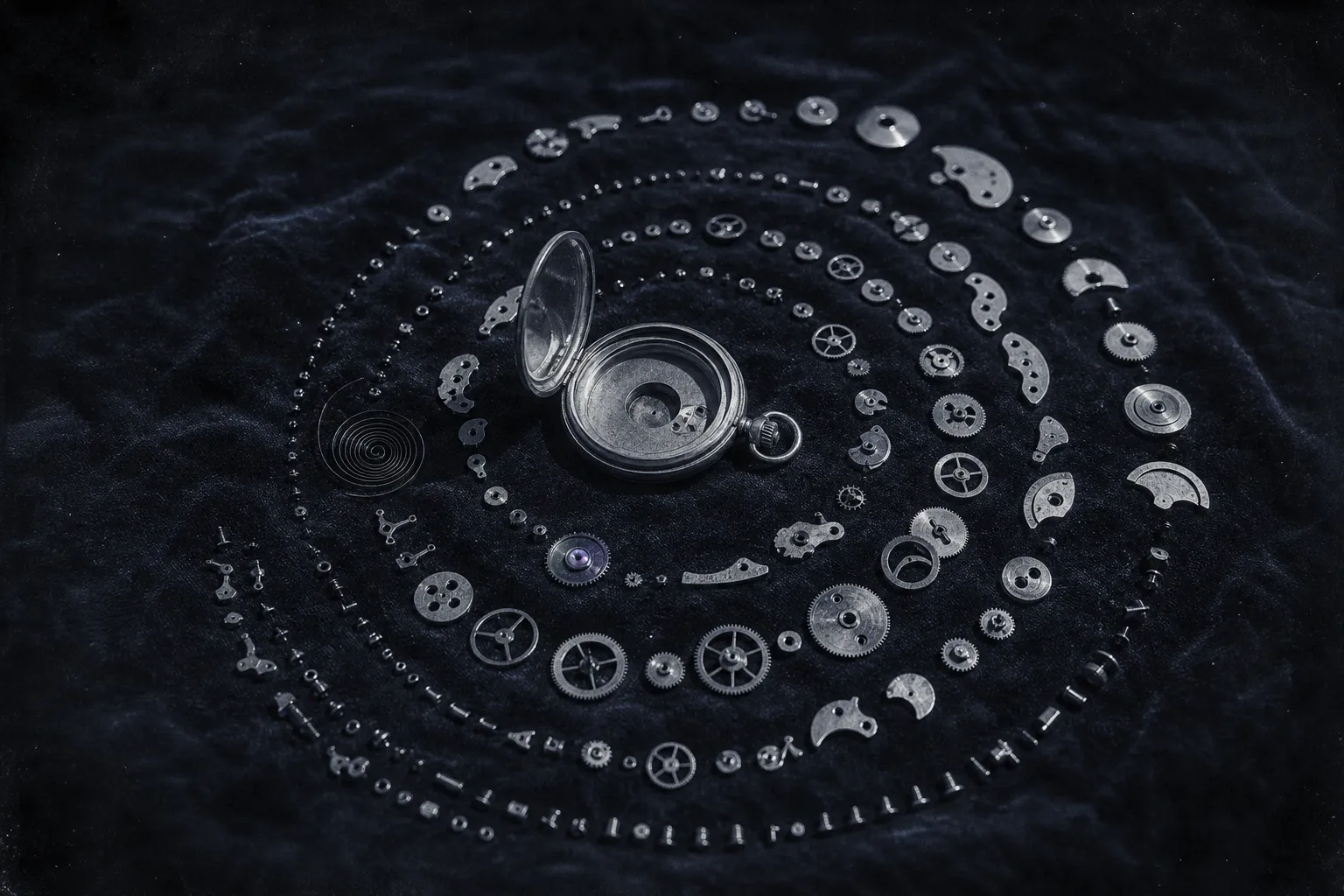
This is “The Celestial Code” — one guy’s attempt to take the Universe apart gear by gear and discover that the gears are looking back. It doesn’t look like a textbook, a manifesto, or yet another book “about everything.”
I’ve been building neural networks for twenty years — first to find patterns in data, then to figure out how they learn. And then I looked at the Universe and recognised in it the same patterns, the same learning equations, the same architecture. Which sounds, you’ll admit, roughly like a plumber looking at Niagara Falls and saying: “There’s a pressure problem here.” Maybe he’s right; or maybe he just sees pipes everywhere. I see pointers instead of pipes.
Vanchurin showed it formally: the world may literally be a neural network. Vazza and Feletti showed it empirically that the brain and the Universe are built the same way. Levin showed that the shape of living things is set by electricity, while DNA is responsible only for the building blocks; Tononi showed that consciousness is measurable; Hoffman that we see an interface, while reality itself remains beyond it. These are all other people’s papers from serious peer-reviewed journals; I just piled them up and looked around, and the pile turned out to be suspiciously tidy.
The first version of this text came out in July 2024 — thirty-five pages, wide eyes, too many exclamation marks. Since then I’ve built a formal model (Pointer Architecture) and added what the first version sheepishly lacked — my own biography. Because the “folds in reality” this book is about, I have been seeing since childhood, while spending twenty years pretending that was normal. And it turned out to be normal, — but for a different picture of the world, the one I’m describing here.
My biography in this book works as data — unreproducible, subjective, the kind that gives a methodology committee a migraine, but still data, first-person data. The only data I have about what it’s like to be inside the thing I’m describing from outside.
The book has three levels of reliability: “verified” (other people’s papers and peer-reviewed journals), “hypothesis” (my model, which has not yet been torn apart, nor crowned), and “personal experience” (I lived through it, can’t prove it, and if you don’t believe me — that’s your right). Where the boundary between them falls I’m not always sure myself, but I promise to always tell you which floor I’m on, — so you know when you’re listening to a scientist, when to a theorist, and when to a guy with saucer-wide eyes telling you what he saw.
The map here is rough, hand-drawn and with dragons in the corner, and this book doesn’t claim to be anything more than an honest draft.
Mikhail Savchenko
2026