The Truck's Steering Wheel
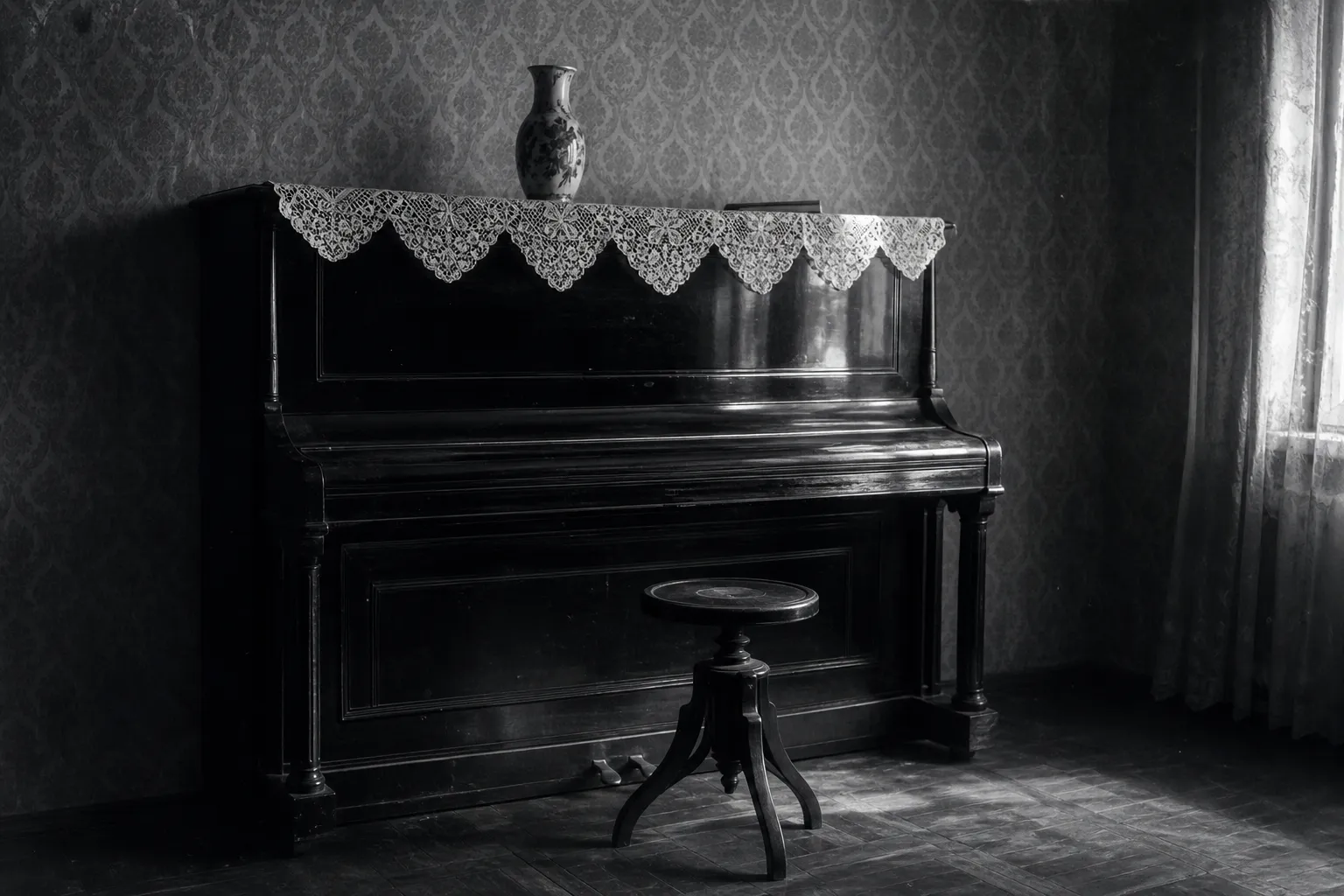
In my grandmother’s flat stood a black lacquered upright piano, a Desna, I think, though I will not vouch for the make, and beside it a round swivel stool, the kind that screws up and down and by that alone justifies its existence in the eyes of a four-year-old.
While I was small I could not reach the keys and could not climb onto the stool either, so I did it differently: I pushed my own child’s armchair up to the swivel stool, climbed into it, and at that second the stool stopped being furniture and became the steering wheel of a truck, and the piano pedals, which my feet could just reach, its pedals. What I hauled in this truck and where, nobody knows, but I did it for long stretches and with complete seriousness. The instrument standing right above me took no part in this game: all I needed from it were the stool and the pedals.
When I grew a little and could reach, I began climbing under the lid and pressing keys at random, and I also got into the habit of looking under the bottom panel (the top one I naturally could not reach until I grew up), and I must report with full responsibility that from below there is nothing especially interesting inside a piano: wood, felt, tightened strings and dust.
Mum played a little and had once, it seems, studied at music school, but of her whole repertoire I remember exactly one piece, “Polyushko-pole,” which in difficulty rates second grade, third at most, and which, by all appearances, was the last thing that school had left her with.
After purchase
This chapter is part of the full edition
The opening chapters are free. The full book is available after purchase and stays in your library.
· · Already bought it? Sign inAn email when new chapters and experiments come out
At most once a week. No account needed; unsubscribe in one click.