Cape Town
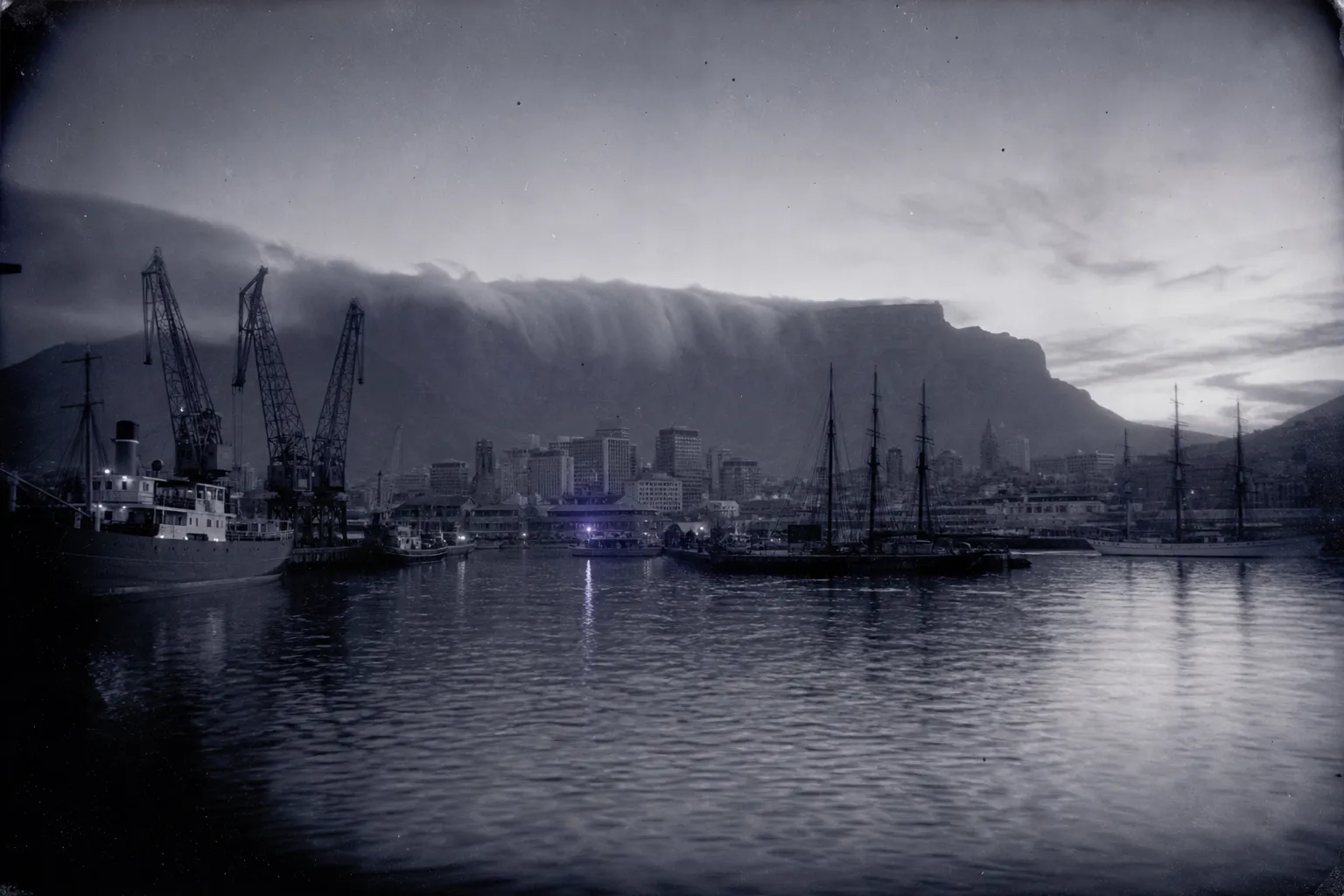
To understand Cape Town, you need to understand why it was built. In 1652 Jan van Riebeeck landed here with three ships of the Dutch East India Company—the VOC. He built a pit stop: fresh water, vegetables, meat—for ships on the spice route between Amsterdam and Batavia (present-day Jakarta). The Cape was a transit point. A refueling station on the global trade highway.
Three hundred years later the Dutch settlers became Boers, the Boers became Afrikaners, and the Cape became the capital of apartheid. From 1948 to 1994 forty-six years of institutionalised separation rested on law, skin colour, documents and rights. The Group Areas Act of 1950 gave the state power to evict non-white populations from any district at any moment; millions were evicted, neighbourhoods demolished. District Six in Cape Town itself was razed to the ground, its residents shipped to the sands of the Cape Flats, the ruins left as a silent monument. Generations were reformatted geographically, — literally a reconfiguration of nodes in the network.
This period forged Mandela — Nelson Rolihlahla Mandela: lawyer, activist, terrorist (from the apartheid state’s point of view), prisoner from 1962 to 1990, — twenty-seven years, eighteen of them on Robben Island, twelve kilometres from Cape Town (visible from the waterfront on a clear day). Later: president (1994–1999), Nobel laureate, symbol. Died in 2013, at home, surrounded by family, at the age of ninety-five.
Millions of people — millions, not dozens and not hundreds — claim they remember Mandela dying in prison in the eighties: they watched the report on television, they saw footage of the funeral, they heard the widow’s eulogy. All of it in detail, all of it with conviction. Only it never happened: in the eighties Mandela was alive, sitting in prison, and still ahead of him were the negotiations, the release, the presidency, and twenty-three years of freedom.
The phenomenon is called the Mandela Effect. The term was coined in 2009 by American researcher Fiona Broome: she stumbled upon several people who independently “remembered” Mandela’s death in prison and started wondering, — and then it turned out that there were thousands of them, and then millions. The case turned out not to be isolated: the Monopoly logo without a monocle (there never was one); the Berenstain Bears through “a,” not Berenstein through “e”; Darth Vader saying “No, I am your father,” not “Luke, I am your father,” which everyone remembers; Pikachu with a black-tipped tail (the tail was always yellow). Hundreds of collective “memory errors.”
Tras la compra
Este capítulo forma parte de la edición completa
Los primeros capítulos son gratuitos. El libro completo está disponible tras la compra y queda en tu biblioteca.
· · ¿Ya lo compró? Inicie sesiónUn correo cuando salgan capítulos y experimentos nuevos
Como mucho una vez por semana. Sin registro; baja con un clic.