12
Graph Paper
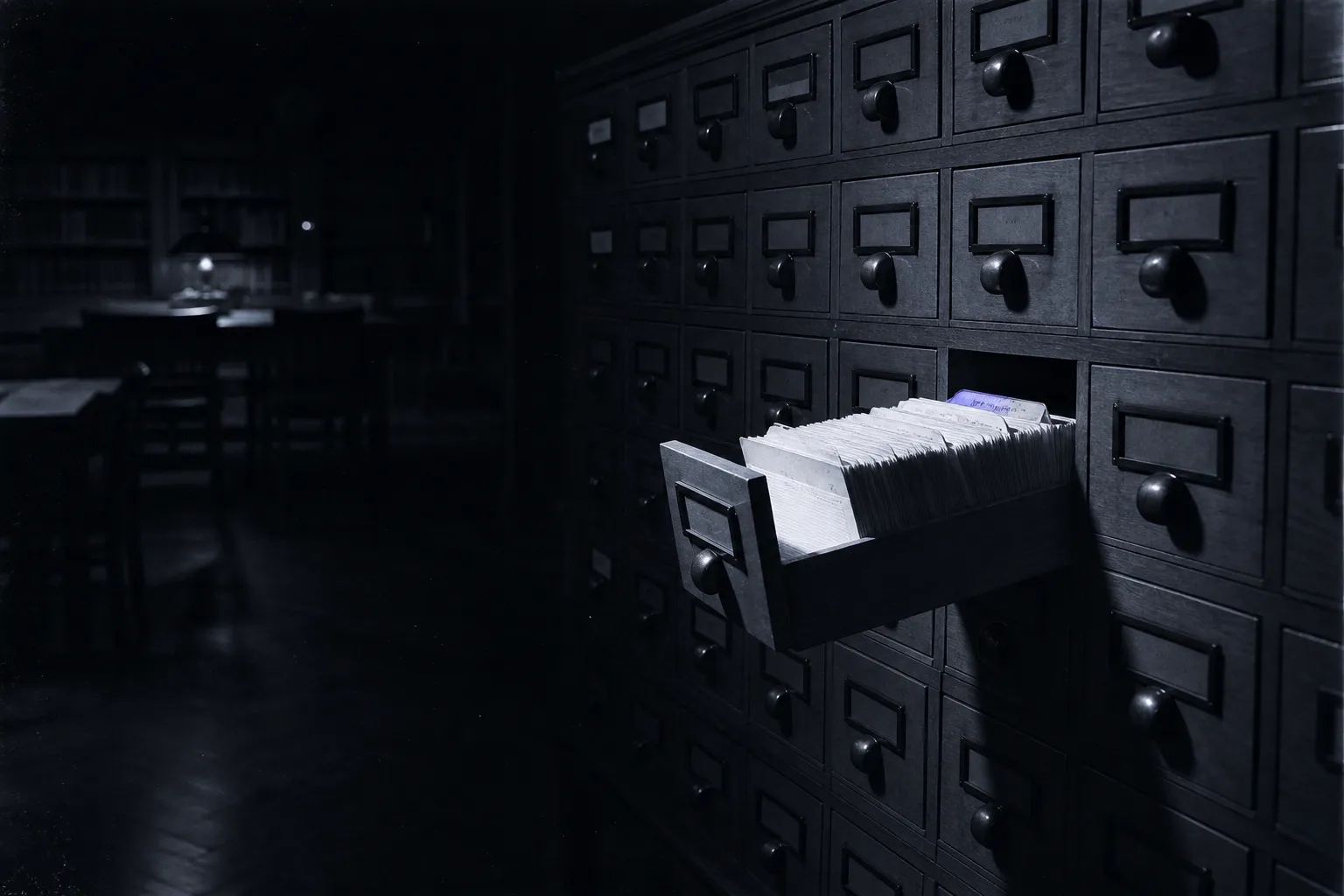
The household I am going to talk about stores what a machine has once learned and retrieves what is needed on request. I did not recognise the wall there at all quickly: it looked so different that for several years it seemed like a series of unconnected nuisances.
In the second chapter, having dealt with two degrees of sharpness and the one-per-cent cortex, I asked a question and left it hanging: we feed machines an image in which a pixel at the edge of the frame is worth as much as a pixel in the centre, and a memory in which an event from last Thursday is stored in the same detail as yesterday’s. Do we lose more on this evenness than we gain?
I did not ask it out of love for symmetry: for several years we had been building a memory arranged that way: everything is broken down into facts equally carefully, everything is indexed in equal detail, everything is retrieved the same way. Even graph paper instead of an eye.
And for quite a long time we wondered why the results jumped about.
The puzzlement went like this. Memory systems are commonly thought to have a quality. One. It is measured on an accepted set of tasks, you get a number, the numbers are lined up in a table, and the table has a top. That is how every single one of these systems is sold, and a good half of the papers are arranged no differently.
We took our own engine, the same code, the same build, the same set of tasks, and ran it twice, changing only the settings. With the default ones it came out at 62.1 per cent. With the other, assembled for conversational diaries, 76.6.
A difference of fourteen and a half points. The probability that this is chance is about one in a hundred billion.
Both numbers are correct. Both settings are sound, each is right on its own material, and fourteen points is the price you pay for reading someone’s diary in glasses made for business correspondence.
Tras la compra
Este capítulo forma parte de la edición completa
Los primeros capítulos son gratuitos. El libro completo está disponible tras la compra y queda en tu biblioteca.
· · ¿Ya lo compró? Inicie sesiónUn correo cuando salgan capítulos y experimentos nuevos
Como mucho una vez por semana. Sin registro; baja con un clic.